

Hampton Roads Community News
Documentary Being Produced on Hampton’s Historic Aberdeen Neighborhood
By Rosaland Tyler
Associate Editor
New Journal and Guide
David Barr, a Hampton native, is filming a documentary called “The Aberdeen 158: Built for Us, By Us.”
While some have never heard of this historic African American neighborhood located in Hampton, Va., Barr, age 80, is determined to spread the word. Barr is a playwright and a descendant of the African Americans who began moving into 158 new brick homes in Hampton, from 1934-1937. Barr said he plans to wrap-up his documentary in one year on the African Americans in Hampton who moved into the Hampton neighborhood, which was one of 55 federal Subsistence Homesteads Projects and the official name for projects launched by the New Deal effort during the Great Depression.
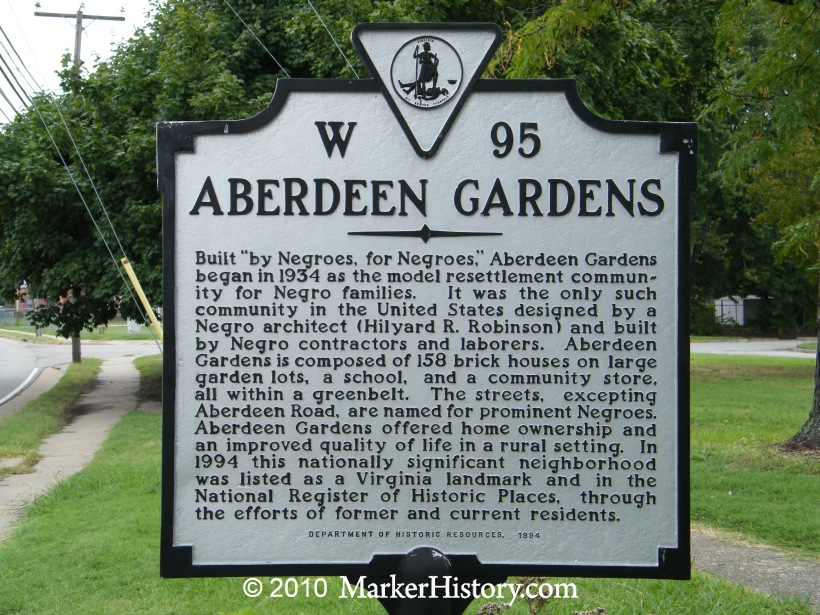
During that era, construction also began on nearby Aberdeen Elementary School in Hampton’s historic Aberdeen community. This historic subdivision stretches over 440-acres in Hampton and was the only Resettlement Administration community for African Americans in Virginia, a city release noted.
A few months ago, $10,000 was awarded to the documentary that Barr is producing.
“We are very excited that the important, multi-generational stories. . .will be told,” said 80-year-old Margaret Wilson, who was 5 when she moved into her grandparent’s home in Aberdeen. “There was no class,” Wison said in a recent Press Reader interview. “Laborers, doctors, lawyers, pharmacists, and teachers all (lived) next to each other.”
Dr. Colita Fairfax, a Norfolk State University professor added, “Black people were building their own homes, working with Hampton Institute students in the masonry programs.”
The documentary will cover a lot of ground.
It will explain how the planned neighborhood was built by Hillyard R. Robinson, an acclaimed African American architect from Howard University, who received his bachelor’s degree in architecture from Columbia University in 1924 and master’s in 1931.
Before Robinson died at age 87, his list of clients included Frank Sinatra. He also designed houses for Lucille Ball and Desi Arnaz, Lon Chaney, Tyrone Power, Martin Landau, William “Bojangles” Robinson, Jay Paley, William Paley, and Walter Winchell.

He also supervised the construction of the Tuskegee Army Airfield in Alabama, where the famed Tuskegee Airmen trained.
An initial $245,000 federal grant gave birth to the historic Aberdeeen subdivision, which is currently the site of a foundation, a museum, and the Tucker Family Cemetery.
Aberdeen has seven streets named for prominent African Americans: (1) Lewis Road, (2) Weaver Road, (3) Walker Road, (4) Mary Peake Boulevard, (5) Davis Road, (6) Russell Road, and (7) Langston Boulevard.
In 1994, Aberdeen was listed as a historic district on the Virginia State Register of Historic Landmarks. It is also part of the Hampton Roads history tour.


 Black Arts and Culture1 week ago
N.C. Former Judge Donates Valuable Art Collection To HU
- Black History1 week ago
Middlesex County 250 To Explore Va. Blacks In American Revolution “Finding Freedom”
 National Commentary4 days ago
What Does the Data Say: The War President
- HBCU6 days ago
HRBMP Issues Condolences For Tragic Death of NSU Journalism Student
- Black Arts and Culture5 days ago
Special Screening Of INDY Film At Naro: “EARTH’S GREATEST ENEMY”
- Local News in Virginia6 days ago
Scott Leads House In Silence For ODU Tragedy
- Black Business News3 days ago
Sen. Lucas Keeps Heat On To End Exemption for Data Centers
- Black Community Opinions4 days ago
From NFL Star to Rural Youth Mentor: Ervin ‘Blue Print’ Parker’s Leadership Academy


