
National News
Deep South States Take A Long-Overdue Step Out of The Jim Crow Past
“Today it is perfectly legal to discriminate against criminals in nearly all the ways that it was once legal to discriminate against African-Americans. Once you’re labeled a felon, the old forms of discrimination – employment discrimination, housing discrimination, denial of the right to vote, denial of educational opportunity, denial of food stamps and other public benefits, and exclusion from jury service – are suddenly legal. As a criminal, you have scarcely more rights, and arguably less respect, than a Black man living in Alabama at the height of Jim Crow. We have not ended racial caste in America; we have merely redesigned it.”
– Michelle Alexander, The New Jim Crow
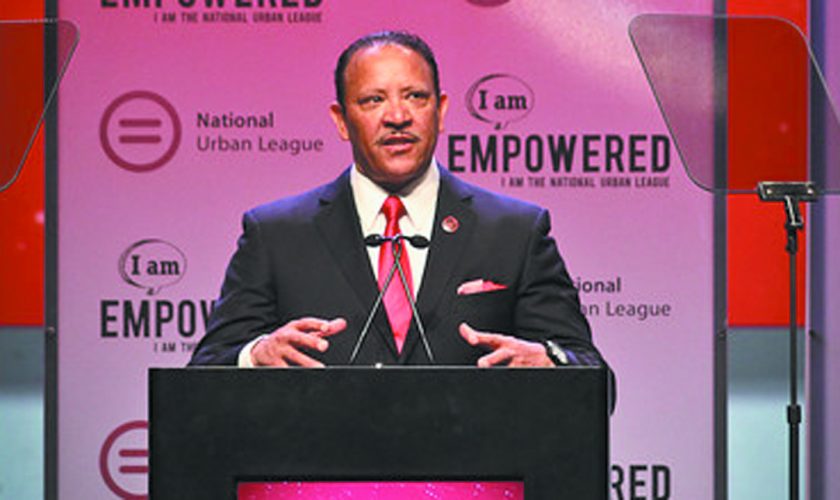
The Urban League Movement congratulates two states in the Deep South that took a step out of the dark Jim Crow past by passing major criminal justice reforms on Election Day.
In Louisiana, voters overwhelmingly approved an amendment to the state constitution that will require unanimous jury verdicts to convict on felony charges. Until now, Louisiana was one of only two states, along with Oregon, that allowed non-unanimous jury verdicts for felonies, and only Louisiana allowed them for murder.
And more than a million previously incarcerated Floridians have had their voting rights restored. Florida was one of 13 states that bar those convicted of felonies from voting even after their sentences have been served.
Both laws had their roots in the post-Reconstruction-era crackdown on civil rights for Black Americans, more than 150 years in the past. They have rightly been consigned to the ash heap of history.
Drafters of the 1898 Louisiana state constitution aimed to “perpetuate the supremacy of the Anglo-Saxon race in Louisiana,” scrubbing from the rolls nearly all 130,000 Black registered voters. By law, they couldn’t simply ban Black people from voting or serving on juries, so they devised a system that would invalidate the votes of the few African-Americans who might make it on to a jury – the votes of only nine of 12 jurors would be counted.
In its 1972 Apodaca v. Oregon ruling, the U.S. Supreme Court validated non-unanimous verdicts in state courts – but not federal ones. At a Constitutional convention the next year Louisiana lawmakers changed the number of jurors required for a verdict from nine to 10.
The law’s racist intent carried into the present day. Roughly a third of Louisianans are Black, but two-thirds of state prisoners and three-fourths of inmates serving life without parole are Black.
An analysis of convictions by The Advocate newspaper found that 40 percent of all convictions in Louisiana came over the objections of one or two holdouts. When the defendant was Black, the proportion went up to 43 percent, versus 33 percent for white defendants. In three-quarters cases analyzed, the defendant was Black.

Those convicted of felonies have been banned from voting in Florida since the ratification of a new state constitution in 1872. According to Florida lore, lawmaker WJ Purman reportedly boasted he had prevented the state from being “n***erized.” At the time, so-called “Black codes” – laws that restricted Black people’s right to own property, conduct business, buy and lease land, and move freely through public spaces – criminalized a staggering proportion of the African-American population.
Within a few years of the end of Reconstruction, an estimated 95 percent of convicts in the South were Black. A century and a half later, felony disenfranchisement has left more than one in five Black Floridians unable to vote.
Voters in Louisiana and Florida recognized not only the racism, but anti-American spirit inherent in non-unanimous jury verdicts and felony disenfranchisement, and were eager to bring their states’ laws into line with most of the rest of the country. We call on other states with similar laws remaining on the books to follow their example.
By Marc Morial
TriceEdneyWire.com


-
 Print and Digital
$65.00
Print and Digital
$65.00
-
Classic Print
$50.00
-
E-Guide
Original price was: $72.00.$35.00Current price is: $35.00.


 Black Business News1 week ago
Hampton University Convenes State of the Media Forum
- Hampton Roads Community News1 week ago
Norfolk Legislators Host Town Hall: A Window on Advocacy
- Black Business News7 days ago
Atlantic Union Bank Launches Small Businesses Partnership Grant Initiative
- Hampton Roads Community News1 week ago
Before the Dream: Scholar Reveals Little-Known Details About Young MLK, Jr. In New Book
- Black Community Opinions6 days ago
Annual HRCAP Event Recognizes 8 Local Leaders In Hampton Roads – June 4
- Black Community Opinions5 days ago
U.S. Supreme Court Got Voting Turnout Facts Wrong; Democracy Pays The Price
- Black Business News6 days ago
Keisha Lance Bottoms is Democrats’ pick in high-stakes Georgia governor’s race
- Black Arts and Culture5 days ago
Ben Crump Channels Book Sales Into Millions For Black-Owned Bookstores


